Search interesting materials

Monday, September 15, 2014

Call for papers for the 13th Research Meeting of the NIPFP-DEA Research Program

On behalf of National Institute for Public Finance and Policy, New Delhi, and the Department of Economic Affairs of the Ministry of Finance, New Delhi,  the organisers invite papers for the 13th Research Meeting of the NIPFP-DEA Research Program. This builds on the preceding 12 such meetings (http://macrofinance.nipfp.org.in/meetings.html). The meetings have a blend of academic scholars, senior policy makers and finance practitioners.

THEME: 

Macroeconomics and Finance, with an accent on capital controls, capital flows, international finance including firm internationalisation, the exchange rate regime and monetary policy.  Papers that illuminate these issues in emerging markets are of particular interest.

DETAILS: 

Date: 6 to 8 March 2015
Check in: 5 March 2015 (14:00)
Check out: 8 March 2015 (12:00)
Venue: Neemrana Fort Palace, Rajasthan, India

PAPER SUBMISSION PROCEDURE: 

Extended abstracts or papers (completed papers preferred) should be sent to the e-mail address
anurodh54@gmail.com  on or before 5 December 2014.


SUPPORT: The organisers will provide local hospitality and partial air fare for academic presenters.

Sunday, September 14, 2014

A dramatic cost reduction for KYC using the e-KYC API of UIDAI

by Suyash Rai, Smriti Sharma, Sanhita Sapatnekar.

The problem


On 2001-09-11, Mohammad Atta hijacked American Airlines Flight 11 and flew it into the North Tower of the World Trade Centre. Tracing flows of money led to the observation that a high ranking official within Pakistan's Inter-Services Intelligence (ISI) had allegedly ensured more than USD 100,000 was wired to Mohammad Atta, before the attack took place. Law enforcement authorities became quite keen to observe and block the `financing of terror'.

The Financial Action Task Force (FATF) develops and promotes policies that hinder money laundering, financing terrorism and financing weapons of mass destruction. One element of this requires financial institutions of member countries to implement `Customer Due Diligence' (CDD) for a variety of financial activities and circumstances. India is a member of FATF and Indian regulators are obliged to apply CDD. Regulators in India have applied CDD through excessive forms of `Know Your Customer' (KYC) requirements, which go well beyond the principles-based risk-sensitive requirements of CDD. As a result, financial firms in India face increased costs.

When an Indian financial service provider deals with a low value customer, the cost of performing the KYC that's required is often a substantial one when compared with the lifetime NPV of the customer. This has hampered financial inclusion by reducing the profitability of small value customers in the eyes of financial firms.

In 1999, Project OASIS (Old Age Social & Income Security) was established by the Ministry of Social Justice and Empowerment to make recommendations on how to develop old age income security. One of the key insights of Project OASIS was the importance of modern computer technology for the objective of serving small value customers. Paper- and human-intensive processes can even be viable for the rich, but when dealing with poor people, the only way to make ends meet is to push to the frontiers of technology.

A new attack upon the KYC problem


The Unique Identification Authority of India (UIDAI) has developed a novel technology that cuts the cost of opening an account by approximately 80%. The steps of this process are as follows:

  1. First, the customer has to have already enrolled in Aadhaar once. This involves supplying the name, identification, address details, and biometric data including the photograph. As there are many Aadhaar applications springing up in India, many individuals have ample incentive to undertake this cost of enrollment, once. Recent data shows that 670 million people in India have enrolled.
  2. Now let's focus on the account-opening process at a financial firm. The customer shows up with his Aadhaar number.
  3. The staff-person at the financial firm engages with the customer and takes the Aadhaar account number and captures fingerprints using a device.
  4. Aadhaar has provided an applications programming interface (API) through which the software at the financial firm now reaches into the Aadhaar database, presents (encrypted) credentials of a Aadhaar number and matching fingerprints, and requests a packet of information.
  5. This information is used to populate the form for the account-opening process. E.g. the photograph is brought from the Aadhaar database and placed into the account opening form. The entire process -- from fingerprint to completed form -- takes roughly 15 seconds.

e-KYC eliminates human effort in account opening, and allows residents to present their KYC information electronically and instantaneously, without needing any physical form of identity or address proof. e-KYC eliminates the movement and storage of verification papers, and therefore costs of document management. Error-free data is obtained from the Aadhaar database, at a much lower cost when compared with the costs of typing in and removing the errors in human-created data. e-KYC is a game changer when it comes to opening accounts for poor people.

An example


Invest India Micro Pension Services (IIMPS) enables low income informal sector workers to accumulate micro-savings for their old age. It has faced KYC challenges in the past, and is an early adopter of e-KYC. IIMPS's target population, i.e. the informal sector poor, cannot gain access to formal financial products as they have insufficient identity documentation (due to factors such as migration), or a complete lack thereof. As a result of this, and due to differences in KYC compliance across regulators, a host of interested low income workers are unable to join the integrated micro-pension program. This is only the first half of the problem. Lengthy KYC application and verification procedures cause significant cost and time overhead expenses for IIMPS while processing each micro-pension application. e-KYC has resolved both of these issues.

Watch a demo


Making it a reality


In the past, there has been doubts regarding the future of UIDAI's Aadhaar project. However, the BJP government has recently reaffirmed its interest in continuing with it. e-KYC is a valid document for all financial services, under the Prevention of Money Laundering Act Rules. e-KYC has also been accepted as valid proof of identification and address by five regulators in the financial sector, namely the Reserve Bank of India (RBI) ; the Securities and Exchange Board of India (SEBI) ; the Pension Fund Regulatory and Development Authority (PFRDA) ; the Insurance Regulatory and Development Authority (IRDA) ; and the Forward Markets Commission . It is also compliant with the Information Technology Act, 2000. This means the encryption and digital signatures ensure both end-points of the data transfer are secure, making e-KYC legally equivalent to KYC paper documents. e-KYC is up and running. However, most financial firms do not (at present) utilise it. They need to modify their software systems in order to utilise the API. As only 670 million people are enrolled in Aadhaar, financial firms have to have the ability to do the old-style KYC also. In the future, there could be situations where the entire process capability for conventional KYC is removed, which would further reduce costs.

Wednesday, September 10, 2014

What role is played by the commodity futures in India?

by Nidhi Aggarwal and Susan Thomas.

Commodity derivatives markets are the unsung song of the Indian reforms that started in the 1990s. The National Agriculture Policy, announced by the government in 2000, advocated the development of futures markets so that consumers and producers of commodities could use these contracts to procure commodities at a more rational price than at the Minimum Support Price (MSP) set by the government, which came with a large cost to the exchequer. This set in place a drive of reforms in these markets, following the reform model that had lead to the development of the Indian equity markets previously.

In 2003, commodity futures contracts started trading on electronic exchanges with a nation-wide reach. Counterparty credit risk, that was a serious problem in the older exchanges, was eliminated using netting by novation at clearing houses similar to their more visible equity derivatives cousins. Total traded volumes of commodities derivatives increased by more than 100 times between 2003 and 2013, with agricultural commodity derivatives increasing by nearly 15 times.

These markets have been subject to a great level of mistrust and criticism, and a slew of negative interventions from policy makers, politicians and other financial sector regulators. From outright banning of contracts to restrictions by RBI, SEBI, IRDA and PFRDA on participation by their respective constituencies in this market, the mistrust from policy makers about the commodity derivatives markets is pervasive. Most of these interventions do not identify a clear market failure that they are attempting to address. The consistent and stated reason for these bans is to reduce high commodity price volatility. This is despite evidence, including some government reports, to the contrary.

In a recent IGIDR working paper, which was created as a part of DEA's D. S. Kolamkar Committee, we examine the commodity markets in India in the two required roles: price discovery and hedging. In this analysis, we use daily futures and spot prices for eight commodity futures markets (six agricultural and two non-agricultural) between 2004-2014. We have two main findings.

Q1: Does the futures market matter in price discovery?


We measure price discovery using the Information Share (IS) of futures prices. The IS can be between 0 (no price discovery) and 100 (sole price discovery) percent. An IS of 50 percent or above implies that futures prices dominate price discovery. We find that the IS of the Indian commodities futures prices is greater than 50 percent. This is evidence that futures help price discovery for all these commodities, both agricultural and non-agricultural. The futures market is the venue of more than half the information production of the market process.

It is often claimed, in India, that futures price movements are driven by market manipulation, because prices of these leveraged products can be manipulated with greater ease than spot market prices. If this were the case, futures prices would have a low relation to the actual demand and supply of the underlying commodity. In a persistently manipulated futures market, we would expect that futures prices would be persistently de-linked from the spot and there would be no price discovery in the observed futures prices. Our analysis provides evidence contrary to this outcome.

Q2: Is the futures market an effective tool for hedging?


Another role of a well-functioning derivatives markets is that the derivatives are useful as hedges -- financial contracts that provide protection against price volatility (Sahadevan, 2012). For the same eight commodities under study, we measure hedging effectiveness by comparing price risk faced by two types of individuals who have a financial exposure to the commodity: one who does not have a futures position (unhedged), and the other has a futures position (hedged). We find that there is some reduction in the risk faced by the hedged individuals, but that the amount of risk reduction varies widely the different commodities. For example, a rubber farmer can use futures to reduce 61 percent of price risk of selling rubber in the future. But the sugar farmer can only reduce 8 percent of price risk. The amount of risk reduction is observed to be even lower for the non-agricultural commodities.

With this evidence, the glass is half full on the role of the futures market for price discovery (the futures market is an important venue for information production). But the glass is half empty in that in many cases, the futures contracts are not too useful for hedging.

What are the bottlenecks?


Price discovery across markets is measured by which price moves first in response to new information and which follows Hasbrouck, 1995. Hedging effectiveness, on the other hand, is the extent of price convergence between the two markets over longer horizons, and depends on how tightly the two markets are tied by arbitrage (Garbade and Silber, 1983). Arbitrageurs ensure that futures market prices are linked to spot market prices through the cost of carrying forward the delivery. The cost of carry, which is also known as the futures basis, typically includes storage costs and capital costs (interest cost for deferred payment on maturity of the futures contract). If hedgers are to get insurance through buying and selling futures, the basis needs to be predictable. Garbade and Silber (1983) say: To the extent that the lower storage and transactions costs and greater homogeneity of the underlying cash commodity encourage arbitrage activities, the linkages between the two markets will be enhanced, thereby improving the risk transfer functions of the futures market. To improve the hedging effectiveness of the futures contracts, we need to make the world safer for arbitrageurs.

In India, several of these factors cited as important for healthy arbitrage activity are missing. These are the bottlenecks that disrupt the ability of arbitrageurs to ensure that the futures and spot market relationship holds over longer horizons. Addressing these bottlenecks will, in turn,   improve hedging effectiveness. These bottlenecks fall into three main categories: those relating to the legal and regulatory uncertainty in the market, those relating to settlement of contracts and those related to availability of products.
  1. Legal and regulatory uncertainty: Among all financial contracts, commodity derivatives have been especially vulnerable to micro-management by the government. These include price and quantity interventions in the underlying spot market, banning of futures contracts and regulatory restrictions on participation. There is interference from the central government (through the Essential Commodities Act and MSP on the underlying commodities), state governments (because agriculture is on the state list) and the other financial sector regulators (who restrict wide participation of institutions and foreign participants and create barriers to development and innovation). These increase the uncertainty about the spot price, derivatives price and the cost of carry in commodities markets.
    Since such interventions affect both the quality of prices in the spot and derivatives markets, and the availability of the spot commodity, they hurt both the price discovery function and the hedging effectiveness of the futures. For example, in our analysis, the IS of sugar futures dropped to 10 percent in the 2010-2014 period, aligned with the ban on sugar futures between May 2009 and September 2010. Similarly, after the restrictions on gold imports imposed by the RBI in mid-2013 we see a drop in the information share of gold futures.
    When a market is vulnerable to hostile actions by the government, such as arbitrary increases in margin requirements or arbitrary reductions in position limits or arbitrary contract bans, this deters the development of organisational capability in financial firms. Arbitrage requires building systems, processes, and sources of capital. Financial firms are unwilling to invest in building a serious organisational capability in commodities arbitrage as the regulatory risk -- of getting shut down by the government -- is high.
  2. Settlement problems: Derivatives markets work better when there is certainty of settlement of the underlying, irrespective of whether it is cash settled (Indian equity derivatives) or physically settled (Indian commodity derivatives). Uncertainty of settlement in the form of quantity and quality of commodities delivered at exchange-registered warehouses or about the warehouse receipts issued, create uncertainty in the link between the futures and spot price.
    Regulation and governance of warehouses is in the ambit of the Warehousing (Development and Regulation) Act, 2007. The Warehousing Development and Regulation Authority, which this Act established as an independent regulator of warehouses, became operational only in the end of 2010, It is yet to develop a clear regulatory role. Once it starts functioning effectively, delivery related problems in the functioning of commodity derivatives, may get mitigated.
  3. Problems of product structure: Commodity derivatives today are very similar to their older and more successful equity market cousins in contract terms and form. However, commodities have different characteristics. Unlike equities, commodities have seasonal cycles in prices, are non-standardised with significant regional differences across the country, with varying supply in different years. In order to improve the efficiency of commodity futures for price discovery and risk management, deep insights into the spot market have to find their way into contract design.
    For example, contract maturity ought to mimic the seasonality of the underlying crops for agricultural commodity derivatives. Commodities with wide variation in available grades ought to have contracts on multiple categories rather than just a fixed grade each year. Once that is in place, index contracts ought to be constructed that proxy the risk of the single commodity (this is hampered today by the FC(R)A which prohibits index contracts). There may be a case to consider a wider range of number and location of delivery centers depending upon the commodity. Such features require focussed knowledge development about the specifics of each commodity and what will increase the utility of the futures for traders with positions in the underlying spot.

Moving forward


Now that FMC is part of the Department of Economic Affairs, and now that major changes have taken place in the ownership and governance of commodity futures exchanges, the process of building trust in FMC and in commodity futures exchanges can commence. For a series of commodities, particularly agricultural commodities, India is potentially a global player in the field of commodity futures. The emergence of a well regulated commodity futures ecosystem will make possible a new phase in Indian finance in terms of exporting financial services.

This requires a work program at FMC comprising eight elements:
  1. Foundations of public administration. The foundations are laid by public administration reforms as envisaged in the FSLRC Handbook that is being implemented at all financial regulators. This will reshape the internal working of FMC and its interactions with the economy. There should be a design of a report card about how well FMC is faring, including the concept of the annual report from FSLRC. A quarterly report card can also be constructed of the working of commodity futures market around measurement of liquidity, market efficiency, the information share of commodity future and the hedging effectiveness.
  2. Improvements in information. FMC should lead the work of improving the statistical system on all issues connected with commodity futures trading. This includes better measurement of spot prices e.g. through polling. FMC should construct, and release, high quality data about the field, which will foster better thinking by financial firms and better analysis of policies.
  3. Improvements in research. In order to do regulation, a clear scientific understanding is required about the market failures in the field, and the minimum interventions through which those market failures can be addressed. This requires constructing a body of literature on these questions. At present, there is a negligible flow of academic research papers on commodity futures in India. Initiatives need to be undertaken through which there are (say) 12 high quality papers which are produced per year by the research community.
  4. Market failure 1: Consumer protection. FMC needs to measure and understand the ways in which consumers are being mistreated when they become customers of commodity futures exchanges. This should lead to drafting and enforcing regulations that prevent this.
  5. Market failure 2: Micro-prudential regulation. FMC needs to establish a scientific foundation for margin rules and position limits through which the failure probability of clearing members goes down.
  6. Market failure 3: Systemic risk. FMC needs to establish a scientific foundation for margin rules so as to drive down the failure probability of a clearinghouse to near-zero levels. FMC must get away from the methods used for manipulating margins in the past based on opinions of the government on the level of the price or of price volatility.
  7. Market failure 4: Market abuse. FMC needs systems to detect and enforce against market abuse. There is much value in utilising the notions of market abuse as defined in the draft Indian Financial Code.
  8. Problems of coordination. FMC needs to work with other financial regulators to remove the barriers which have been placed, that hamper participation in commodity futures exchanges by a broad array of financial firms. This will require trust in FMC and in the commodity futures ecosystem. FMC must also coordinate work on strengthening WDRA, as warehousing is a critical industry that enables the working of commodity futures markets in general and commodity arbitrage in particular. FMC must coordinate work with all agencies in the government that have the power to ban commodity futures trading, and put an end to such practices.

After a better policy regime is put into place, it will take many years for financial firms to come to trust FMC and the commodity futures ecosystem, and then commit resources to develop organisational capabilities in the field. Hence, there is urgency in implementing these changes.

Monday, September 08, 2014

The fiscal correction that India requires is feasible: Aadhaar and subsidy reform holds the key

The size of the task


Last year (i.e. 2013-14 RE), the fiscal deficit was 4.6% of GDP. The fiscal deficit budgeted for 2014-15 is 4.1% of GDP. The budget speech has said that the target for 2015-16 is 3.6% and then the target for 2016-17 is 3% of GDP. For India to achieve macroeconomic stability, this fiscal contraction is extremely important.

How are we going to get this overall gain of 1.6 percentage points of GDP from 2013-14 till 2016-17? The international experience suggests that sustained fiscal corrections are dominated by reduced expenditure; attempts at increased tax revenues tend to peter out as the economy changes its behaviour in response to short-termist tax measures. Hence, we have to focus upon expenditure reductions.

How might we get an expenditure reduction of 1.6 percentage points? Will it be done by doing a little bit here and a little bit there? The trouble is: 1.6 percentage points of GDP is a full Rs.2,06,026 crore (i.e. Rs.2.06 trillion or $33 billion). Minor initiatives will not move the needle. Any one initiative which yields an impact of below Rs.10,000 crore is not a big element of this task. What this requires is the pursuit of qualitative change.

Aadhaar offers a stab at the task


In November 2012, we at the Macro/Finance Group of NIPFP had done a cost-benefit analysis of UIDAI. At the time, the key focus was on the question: Is the construction of UIDAI an NPV-positive project? The answer of this calculation was in the affirmative. The extremely conservative estimates made in that calculation are revealing about the far-reaching consequences of Aadhaar for improvements in numerous expenditure programs. A big area for focus is on better engineering, and reforming, subsidy programs. We should think about it in three parts:

  1. Superficial change: just add biometric authentication. The first and easy area for progress is the removal of duplicates (i.e. payment to the same person twice) and ghosts (i.e. payment to a non-existent person). This is low hanging fruit and only requires systems engineering of existing programs using UIDAI. At this stage, nothing changes on the working of the existing program. People continue to buy subsidised LPG through the existing subsidy program; there’s just a biometric check which establishes that the same person is not buying many cylinders. NREGA continues to operate; we just use Aadhaar to eliminate ghosts and duplicate payments.

  2. Deeper change: Commodity-specific subsidies continue, but transfers are in cash. The second stage is deeper changes in the design of the program. As an example, consider the LPG subsidy. Progress had begun with direct benefit transfer for LPG (“DBTL”). In 289 districts, consumers got cash of Rs.435 a month into their bank accounts when they purchased LPG at the market rate. This program was working; Rs.5,400 crore was transferred into 28 million accounts. Unfortunately, the UPA government lost nerve and on 30 January 2014, this initiative was shut down.

  3. Eliminating commodity linked and other subsidies, and doing income support. Once enough people are plugged into Aadhaar-enabled payments, it becomes possible to replace commodity-linked subsidies by a cash subsidy. This is more efficient as the government would not distort commodity markets or intrude on the preferences of households. Government would empower poor people with money and not get into decisions about whether consuming LPG is a good thing. The construction of such a cash-based subsidy involves its own design choices. This design work can start now, and one year from now, Aadhaar adoption will be on a scale large enough to support implementation.
All this was quite novel a few years ago, but by now these ideas are ripe for implementation. The policy analysis and workplan documents are ready on the fertiliser and fuel subsidy, use of Aadhaar for large-scale payments infrastructure, and restarting DBT for LPG.

 The low hanging fruit from Aadhaar adoption in the implementation of subsidies works out to around Rs.75,000 crore a year. While this does not take us all the way to the required Rs.2,06,026 crore, this is big enough to move the needle in a way that tinkering at the margins is not. Re-engineering subsidy programs using Aadhaar also sets the stage, and changes the political possibilities, for deeper subsidy reform (e.g. capping the number of cylinders per household, or kilograms of subsidised fertiliser per farmer) through which the remainder of the required reduction in expenditure can be obtained.

The early initiatives which can be easily rolled out are reviving the DBTL (that was done for LPG) and using the same framework for Kerosene, Fertiliser and Food. Alongside this, state governments can also use DBT for water and electricity subsidies, which will help free up fiscal resources at the state level. As with DBT for LPG: when the household pays a water or electricity bill, the subsidy would show up in the household’s bank account.

DBT can help in all government to person payments including : MNREGA, scholarships, salaries, pensions. It can help in delivering stipends and incentives to the 1-2 million contract workers associated with the government: SSA school teachers, anganwadi workers, ASHA workers etc. The WTO may require India to put an end to procurement from farmers; we can shift to delivering cash to farmers using DBT.

 It is important to remember that every time we shift from a price-based subsidy to an income support, this simultaneously yields an impact of GDP growth, as the distortions associated with price-based subsidies are removed. Hence, such an approach to reform simultaneously hits the numerator (fiscal deficit measured in rupees) and the denominator (GDP), and thus gives a bigger bang for the buck.

A few minor things or grand schemes?


To summarise, Aadhaar is the big idea around which we can take a stab at the required 1.6 percentage points of GDP of a reduction in expenditure by 2016-17. This generates cost savings right away, and sets the stage for deeper subsidy reform which will generate the remainder of the required fiscal correction. Aadhaar has been constructed and is ready to go. The BJP government has reaffirmed its interest in continuing with this program. What a difference a few years makes: Aadhaar was viewed as a complex, risky, new system, but now it’s a big working system:

  • 670 million Aadhaar numbers have been issued, and the system is at its point of inflection into near-complete coverage of the poor people who would be beneficiaries of subsidies.
  • A few thousand crore have been transferred through Aadhaar DBT.
  • Over 60 million bank accounts are linked to Aadhaar.
  • Several million authentications have been done so this is also a proven capability.
  • Jan Dhan Yojana will use Aadhaar e-KYC, which is a statement of the maturity of this capability.
  • Jan Dhan Yojana, as presently envisaged, has many problems: it is a continuation of 60 years of failed RBI thinking on financial inclusion. But this work could be channelled into a big push for getting a Aaadhar-linked mobile-based payments mechanism to every citizen of India, which would be a pretty good thing.

As with all important progress in India, what matters is obtaining execution on grand schemes, and not tinkering at the margin. Our present ways in public administration are broken: we need to think big, and implement new systems. The centrepiece of our journey is implementing five big transformational projects: Aadhaar, the Goods and Services Tax, the Indian Financial Code, the Direct Taxes Code, and the Delhi-Mumbai Industrial Corridor. These are the five initiatives where the analysis and thinking is complete, and we’re ripe for execution. They are big enough to move the needle for the Republic.

For many bureaucrats, it is far more comfortable living around little initiatives, and being fashionably cynical about grand schemes. The little stuff is, however, a bad use of top management time, and becomes irrelevant in a few years. A more intellectual perspective shows us, by looking back into 20 years, that it was only the grand schemes that mattered.

Wednesday, September 03, 2014

SAT order on NSE's actions after the Emkay crash

by Pratik Datta and Chirag Anand.

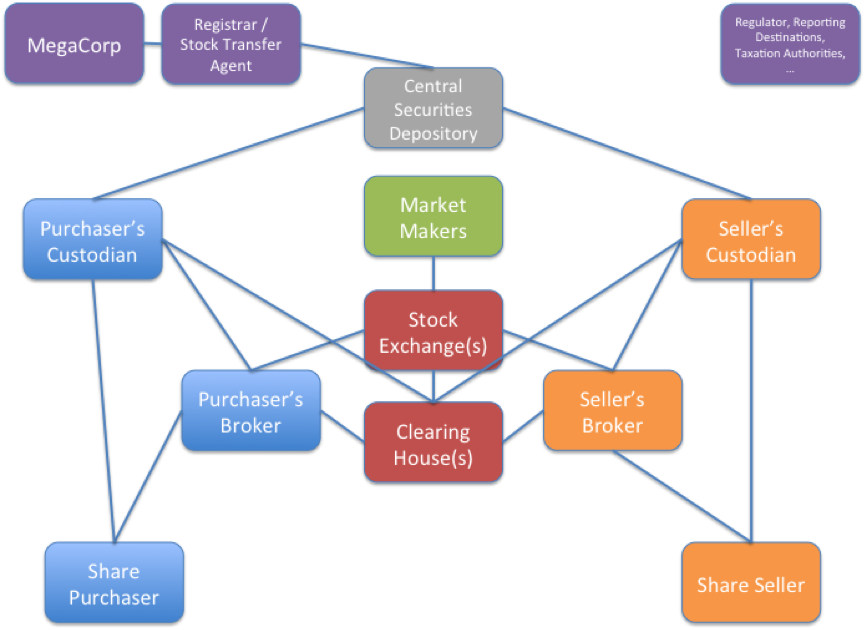
In a modern securities market, eight different entities are involved in trading a single security: Two brokers, two custodians, a stock exchange, a clearing house, a central securities depository, and a registrar or stock transfer agent. The image below shows the working connections among these entities while trading the securites of MegaCorp, a hypothetical company. The entire process is very well articulated here. This complex institutional machinery delivers low transactions costs. For a contrast, transactions costs are much higher in the Indian Bond-Currency-Derivatives Nexus, which has not achieved such sophisticated institutional arrangements.

Image unavailable for the time being.

As shown in the image, the client instructs its broker to place an order to buy or sell a security. Such orders can be of two types:


  • Market orders: An order to buy or sell securities at the best price obtainable after entering the system.


  • Limit orders: An order that allows the price to be specified before entering the system.


  • On instructions from the client, the broker executes the instruction by keying the order (to sell or to buy) into the system. The moment the order hits the server, matching happens, followed by clearing and settlement. But to err is human and brokers are no exceptions. The world over, there have been incidents of brokers keying in incorrect orders by mistake leading to erroneous trades. Such erroneous trades are referred to as "fat finger trades". The worst fat finger trades are the ones where a huge order is placed by mistake, triggering a chain reaction of price fluctuations in the security across the market leading to a flash crash.

    Given that fat finger trades may be disruptive (although unintentional), there are two schools of thought about what should be done about them. One school argues that such trades, being erroneous, should be cancelled. The other school is of the view that allowing cancellation is akin to bailing out the negligent broker who committed the error. Cancelling such erroneous trades will lead to moral hazard issues - brokers will have no incentive to be careful while placing orders, they will not develop better software to prevent such errors in future. Further, there is the complexity of undoing transactions involving multiple entities as shown in the image above. So, instead of cancelling the trades, it is better to impose pecuniary penalties on the wrong-doers and compensate the aggrieved persons.

    Under the present Indian laws, exchanges have the discretion to annul fat finger trades on a case to case basis. This position is problematic from a policy perspective as is argued below.

    In this backdrop, the Securities Appellate Tribunal's decision last week in M/s. Emkay Global Financial Services Ltd. v. NSE, directing NSE to consider afresh whether trades executed between Emkay and two of the respondents should be annulled (at paragraph 42), assumes special significance.

    Emkay v. NSE: Facts

    1. On October 5, 2012, Emkay's trader punched an order to sell 17 lakh NIFTY 50 units instead of punching order to sell Rs.17 lakh worth of NIFTY 50 units.
    2. The sell orders in (1) culminated into a transaction because Respondents 2 to 9 placed unrealistic buy orders to buy NIFTY 50 stocks at prices far away from the market price, without adequate margin money.
    3. As per SEBI's circular, the index-based market wide circuit breaker system of NSE ought to have brought about a coordinated trading halt when the NIFTY index fell below 10%. However, in this case, NSE's circuit breaker did not halt when NIFTY index fell below 10%. It halted only when the NIFTY index fell by 15.5%.
    4. NSE allowed trading to resume within 15 minutes of the halt, in violation of a SEBI circular.
    5. NSE did not agree with the Emkay's plea to annul the trades on the ground that there was "material mistake in the trade" under Cl. 5(a), NSE Byelaws.

    Legal issues addressed by SAT

    1. Whether the `material mistake' clause in Cl. 5(a), NSE Byelaws is intended to protect fat finger traders?
      SAT: No.
      Reason: Emkay was found guilty of committing breach of duty by not installing a suitable validation mechanism before entering a sell order. It was also guilty of negligently transmitting an erroneous sell order from the dealer's terminal to the NSE's server by ignoring four to five level checks that were available in the system. SAT held that Cl. 5(a) is not intended to give relief to a trader who is guilty of not exercising due care and caution and is guilty of negligence. [See paragraph 20]
    2. Whether a fat finger trade should be annulled because of violation of margin money requirements by the trader?
      SAT: No.
      Reason: Annulling trades at the instance of trading members who are guilty of violating margin money norms would be unjustified as it would virtually amount to permitting trading members to trade by violating margin money norms and seek annulment wherever the trades are adverse to the interest of the trading members. In such a case annulment of trades would amount to frustrating the objects with which margin money norms have been framed. [See paragraph 28]
    3. Whether a stock exchange can refuse to annul a fat finger trade on the ground of material mistake in the trade when both parties to the trade are guilty of violating the norms?

    SAT: Left this issue open for NSE to re-consider after hearing the concerned parties. [See paragraph 42]
    Reasons: NSE in its circular dated January 20, 2004, requested its members to refrain from placing orders at unrealistic prices which are far away from the normal market price/theoretical price at that point of time since it affects the normal price discovery process. Respondents 2 and 3 had placed limit orders to buy at a price lower than the market price. The moment the fat finger sell order was placed from Emkay's end, the prices plummeted till they finally matched the pre-placed limit order price of Respondents 2 and 3. In the process, Emkay lost out on a lot of money while Respondents 2 and 3 made a huge profit. Later, one of the grounds on which Emkay asked NSE to annul the trades was that Respondents 2 and 3 had placed unrealistic buy orders far away from the market price in breach of the NSE circular dated January 20, 2004. Had such orders not been placed illegally, Emkay's fat finger trade market order to sell would not have found a match and would not have been executed. That would have given Emkay the opportunity to cancel the erroneous order. NSE rejected this argument on the following grounds:
    • in an anonymous trading system counter parties do not know who is on the other side and their intention of placing buy or sell orders;
    • the buy orders of Respondents 2 and 3 were already there in the system before Emkay placed the fat finger order;
    • unlawful gains by Respondents 2 and 3 were not germane to the issue under consideration.

    SAT did not agree with this aspect of NSE's order for the following reasons:

    • NIFTY index fell by 15.5% because of this fat finger trade. Consequently, trading had to be temporarily halted;
    • More stringent actions should have been taken against Respondents 2 and 3 for regularly placing orders far away from market price;
    • Penalty of Rs. 20-25 lakhs on Respondents 2 and 3 is inadequate in light of the profits made by them in this case.

    Accordingly, SAT directed NSE to reconsider the matter after hearing the parties afresh. Moreover, it clarified that NSE will decide whether it would be just and proper to annul or some of the trades executed between Emkay and Respondents 2 and 3.

    We think that on issues (1) and (2), SAT rightly rejected Emkay's plea of annulment. However, its decision in (3) to remand the matter back to NSE for reconsideration, keeping the option of annulment open, was unnecessary and undesirable from a policy level.

    Applicability of NSE circulars


    SAT presumed that limit orders which are far away from the market price are undesirable. This presumption was based on NSE circulars dated January 20, 2004 and February 22, 2005. Curiously, both these circulars are applicable to the derivatives segment and not to the NIFTY 50 scrips in question, which took place on the equity segment. Moreover, these circulars do not specify any price band within which limit orders should be placed. It is entirely up to the exchange to decide on a case to case basis whether a limit order has detrimentally impacted the price discovery process and accordingly if disciplinary action should be taken. In this case, SAT did not cite any such action by NSE against Respondents 2 and 3.

    Further, limit orders for NIFTY 50 scrips were not subject to any price band at the time of the fat finger trade on October 5, 2012. The SEBI circular dated June 28, 2001, required individual scrip wise price bands of 20% either way. But this circular did not extended to scrips on which derivative products were available or scrips included in indices on which derivatives products were available. Clearly NIFTY 50 scrips were excluded from the scope of this circular. Subsequently, only after the Emkay fat finger trade incident, SEBI issued a circular on December 13, 2012, imposing dynamic price bands of 10% of the previous closing price on stocks included in indices on which derivatives products are available and stocks on which derivatives products are available. NSE issued circular number 78/2012 (download ref. no. NSE/SURV/22310) on December 14, 2012, taking note of the SEBI circular dated December 13, 2012. On December 17, 2012, NSE issued another circular bearing number 80/2012 (download ref. no. NSE/CMTR/22322) stating that the dynamic price bands shall be 10% for stocks on which derivatives products are available and stocks included in indices on which derivatives products are available. Members were advised not to place orders beyond the dynamic price bands in force. Consequently, placing limit orders on NIFTY 50 scrips at a price beyond 10% of the last traded price was made illegal only after December 17, 2012.

    Therefore, on October 5, 2012, Respondents 2 and 3 did not violate any law in force on that date when their limit orders on NIFTY 50 scrips were executed at a price around 20% away from the market price. It would be unjust and illegal to apply the NSE circular dated December 17, 2012, retrospectively to penalise them. Further, in absence of any specific steps by NSE against Respondents 2 and 3 on the limit order issue, SAT had no reason to presume that the limit orders placed by Respondents 2 and 3 were undesirable. In fact, to the contrary, limit orders may play a crucial stabilisation role in extremely volatile situations by acting as a safety net.

    From the viewpoint of the basic economics, limit orders far away from the touch stabilise the market and should be welcome. There is absolutely no market failure when limit orders are placed far away from the touch and there is no case for using the coercive power of the State in interfering with these private choices.

    Margin money


    SAT's final directions to NSE give the impression that violation of margin money can be remedied by annulment of trades. This is akin to missing the forest for the trees. In organised financial trading, a member is required to provide margin money to protect the counterparties from it's credit risk. Over and above margin money requirement, a central counterparty is inserted in the transaction to further protect the counterparties from the member's credit risk. Both margin money and a central counterparty are means to an end - the end being finality of a trade once executed. Therefore, annulling the trade itself for violation of the margin money norms would defeat the broader purpose of having a margin money requirement in the first place. Consequently, even if Respondents 2 and 3 violated the margin money norms, the remedy is not to annul the trades in which they were counterparties. Therefore, SAT should not have left the option of annulment open for reconsideration by NSE. Adequate pecuniary penalties on Respondents 2 and 3 would serve the purpose.

    Applicability of Contract Act, 1872


    Emkay argued that since the fat finger trade was executed due to a mistake, the contract itself was void under the Indian Contract Act, 1872. Mr. A.S. Lamba, a SAT member, rejected this argument (in paragraph 27) on the ground that `Contract Act cannot be imported to present case, since laws governed securities market are adequate to deal with the present case and Contract Act, 1872 came into existence, when present day securities market did not exist or were even contemplated'. This reasoning, based on the principle of contemporanea expositio, is contrary to the Supreme Court judgement in Senior Electricity Inspector v. Laxmi Narayan Chopra, AIR 1962 SC 159, which held:
    ...in a modern progressive society it would be unreasonable to confine the intention of a Legislature to the meaning attributable to the word used at the time the law was made, for a modern Legislature making laws to govern a society which is fast moving must be presumed to be aware of an enlarged meaning the same concept might attract with the march of time and with the revolutionary changes brought about in social, economic, political and scientific and other fields of human activity. Indeed, unless a contrary intention appears, an interpretation should be given to the words used to take in new facts and situations, if the words are capable of comprehending them.
    Although SAT was correct in rejecting Emkay's argument based on mistake, SAT's blanket reasoning that Indian Contract Act, 1872, does not apply to transactions in securities is incorrect. Instead, it should have read in Regulation 6A(1)(b) of SEBI (Stock brokers and sub-brokers) Regulations, 1992 and Cl. 5(a), NSE Byelaws while interpreting the contract between NSE and Emkay to refute this argument.

    How to think about trade annulment


    This judgment gives us an occassion to rethink the policy behind annulment of fat finger trades and accordingly, how to rewrite the laws and regulations sarrounding it. We would suggest there are three key ideas:

    1. Finality of the trade.
    2. Exchanges should not be given vague powers
    3. The market failure and how to address it.

    Finality of the trade. When an investor sells or buys a security, she expects to receive the assured sum of money or the securities as promised. This is the basic objective of the trade. If the organised financial trading system fails to assure the investor of this basic objective, investors will lose confidence in the securities market. This is the reason why central counterparties were introduced to insulate each member from the counterparty's credit risk. To boost investor confidence, finality of settlement has been recognised in most jurisdictions. IOSCO also requires clear legal basis for settlement finality.

    In India, the Payments and Settlements Systems Act, 2007 recognises `netting' and also makes `settlement' final and irrevocable. However, this Act does not extend to stock exchanges and clearing corporations. Consequently, netting and settlement done by stock exchanges or clearing corporations is not treated as final and irrevocable under any statutory law. Instead, finality of settlement in the Indian context is embedded in the bye-laws of the exchanges only. This legal position is undesirable since bye-laws of the exchange can be overridden by other statutory laws (like Companies Act, 2013 during winding up).

    The Financial Sector Legislative Reforms Commission (FSLRC) noted that transactions on an Infrastructure Institution cannot be easily undone. In netting and settling systems, if any individual transaction is undone, all dependant transactions will also have to be undone. This would create uncertainty for all persons using such institutions. Failure of a transaction in the exchange may have domino effect on other transactions. Therefore, the FSLRC categorically recommended that transactions on an Infrastructure Institution should be final and not undone under any circumstances. Instead, it favours pecuniary compensation for the aggrieved party.

    Exchanges should not be given vague powers. Under the present arrangements, a trade can be annulled by the stock exchange under its bye-laws. These clauses, like Cl. 5(a), NSE Byelaws, do not provide any principle on the basis of which the exchange will annul a trade. It is completely up to the subjective satisfaction of the exchange. This is bad legal drafting. Besides being a clear indication of lack of basic policy thinking, it also opens up the possibilities of regulatory capture - a dominant group of traders may unduly benefit from this system. For example, Prof. Varma expressed his apprehension that SEC's 2009 move to annul trades that deviate substantially from current market prices may be the consequence of regulatory capture.

    Understanding the market failure and addressing it directly. When person X engages in a fat finger trade, for a brief time he distorts the price and liquidity of the market. This imposes externalities upon others. There is a market failure here.

    Financial firms and traders have an incentive to underinvest in building high quality software systems as they do not bear the full consequences of their actions.

    Hence, the framework of policy should be designed in a way that makes it very painful for financial firms to make mistakes. See SEBI's recent endeavour to rethink the policy underlying annulment of fat finger trades, and the analysis of this by Finance Research Group at IGIDR.

    Annulling fat finger trades is a bad idea because:


  • Moral hazard on low quality software systems: Annuling a trade done by a trader negligently ensures that the trader will never mend his ways in the future. He knows that his negligence will always be excused and never cause him any harm.


  • Incentives for stabilising strategies: Two types of trading strategies help check extreme price movements caused due to a fat finger trade. First, limit orders placed far away from the normal market price; second, arbitrageurs who take opposite position realising that its a temporary error.


  • Moral hazard on trading strategies: It is impossible for the exchange to determine if a fat finger trade was due to genuine mistake or deliberate plan. Once the law mandates that fat finger trades will be annulled, rogue traders may take advantage of that rule to enter into trades and get them cancelled subsequently. In the process, they may make illicit profits at the cost of the other genuine market participants.


  • SEBI's initiative to rethink the philosophy behind annulment of fat finger trades is a positive sign. SEBI should take this opportunity to implement the FSLRC proposal and prohibit exchanges from annulling fat finger trades. Instead of undoing trade finality, it would be far easier and desirable to ameliorate hardships through pecuniary compensations.

    Tuesday, September 02, 2014

    Work on the 7th Pay Commission

    Background

    In a resolution dated 28th February, 2014, the Government of India has appointed the Seventh Central Pay Commission. Headquartered in Delhi, this Pay Commission has been given 18 months from date of its constitution to make its recommendations. Two full time researchers are required to support these ongoing activities. The selected candidates will provide support the work of the Commission on research, data analysis, and critical policy and legal literature reviews.

    Competencies

    The ideal candidate shall have the following competencies:

    Functional competencies

    • Ability to use databases and handle large data sets.
    • Ability to conduct secondary research through the use of databases (such as Elsevier, JSTOR, Emerald Research and other journal databases).
    • Good research and analytical skills, including skills in data analysis and report writing.
    • Excellent communication and presentation skills.


    Core compentencies

    • Ability to work under supervision as well as with self-initiative & motivation.
    • Approaches work with a positive, constructive attitude.
    • Generates new ideas and approaches, researches and documents best practices and proposes new, more effective ways of doing things.
    • Responds positively to critical feedback and differing points of view.
    • Demonstrates comprehensive knowledge of information technology and applies it in work assignments.


    Required qualifications and experience

    The ideal candidate shall have the following qualifications and work experience:

    Academic qualifications

    M.A. Degree or equivalent in any of the following:

    • Economics
    • Statistics
    • Mathematics
    • Another closely related field


    Professional experience

    - Six months of post graduate experience in a relevant sector is desirable
    - New graduates with exceptional academic qualifications may be considered

    Language requirement

    - Excellent writing and oral skills in English are essential
    - Working knowledge of Hindi and any state language/s would be an asset

    IT skills

    - Expertise in statistical and data handling software (such as Microsoft Excel, SPSS, or Stata) is essential
    - Full proficiency in Microsoft Office is essential
    - Knowledge of computer programming would be an asset

    To apply:

    Applicants should submit the following by email to anurodh.sharma@nipfp.org.in:
    - Cover letter
    - Updated CV
    - Contact details of three references


    Please state the following as the subject of the email: "Job Application (Pay Commission)".

    Monday, September 01, 2014

    What does algorithmic trading do to market quality?

    by Nidhi Aggarwal and Susan Thomas.

    Electronics unsettled the world of organised financial markets when the trading floor and dealers became obsolete. In the late 1980s and early 1990s, this was the subject of great debate. `Program trading' and `portfolio insurance' were believed to have exacerbated the crash of October 1987. Many people believed that human market makers did things that computerised order matching could not. Millions of jobs were on the line.

    When DTB won back the long bond contract from LIFFE by replacing the trading floor, the writing was on the wall. For some time, it was still claimed that electronic order matching exchanges are good for some things like equities and derivatives, but not for the bond market and the currency market. That claim has broken down in the last decade; electronic order matching on exchanges has become important in these areas also.

    The debate of the day is now about high frequency trading (HFT) and algorithmic trading (AT). Once organised financial trading is done electronically, it becomes possible to setup a man-machine hybrid, where a human controls a computer program which does the actual work of looking at information and sending back orders. This man-machine hybrid is faster than a human, is less error-prone than a human, and costs less than a human. Once again, millions of jobs are on the line.

    Several concerns have however been expressed on whether an HFT / AT world is socially desirable or not. Critics argue that high levels of HFT / AT does not do any good to the quality of the markets, exacerbates market volatility, and induces `flash crashes'. There are fears that liquidity provision in the AT world is transient: it is argued that in times of market stress, algorithms step away from this essential function, and instead become liquidity demanders, worsening the volatility in the markets and creating `liquidity black holes'. These are non-trivial concerns; many regulators have started exploring the extent to which the new AT/HFT world has new kinds of market failures, and the kinds of regulatory interventions that might be appropriate in that environment.

    In the last five years, myriad papers have been written on the impact of HFT / AT for market quality. Most of these papers suffer from three flaws:
    1. In the US, the market structure is very fragmented across a large number of trading venues. Hence, observing HFT/AT activity at any one market venue gives an incomplete depiction of either the treatment (HFT/AT) or the outcome (market quality at the level of the whole country). The US is not a good laboratory to study AT/HFT.

    2. Most researchers do not observe a flag for each order or each trade about whether this was HFT/AT. A variety of proxies have been reconstructed by researchers, but all these are fairly imprecise.

    3. Algorithmic traders self-select themselves to be active in certain kinds of securities. This induces selection bias and hampers our ability to claim that AT/HFT has caused the observed changes. More generally, conventional regressions -- where a market quality measure is regressed on a bunch of explanatory variables -- are riddled with endogeneity bias and other statistical problems.

    In a recent paper we make substantial progress on all three problems:

    1. We observe data from the Indian `National Stock Exchange' (NSE), which was the world #1 exchange by number of trades in 2013. NSE accounts for over 75% of trading, there is no OTC trading and there are no dark pools. This yields an ideal clean setting.

    2. NSE's data files precisely tag each order and the counterparties of each trade with an AT/HFT flag so there is no imprecision in identification.

    3. That leaves the problem of endogeneity bias. We utilise an exogenous event -- the launch of co-location at NSE in 2010. The effect of a treatment is best observed when the outcomes of the individuals who receive the treatment (called the `treated') are compared to the ones who are not treated (the `controls'). These two sets of individuals are required to be otherwise similar in all other characteristics. We follow this approach and use matching techniques to identify stocks that are otherwise similar, but one set of stocks saw a significant surge in the level of AT activity after the introduction of co-location, while the other did not. To ensure comparability of days in the period prior (2009) and post (2012-13) co-location due to differences in the macroeconomic conditions, we match dates based on the volatility of the market index (Nifty). The matching on the stocks along with the matching on the dates allows us to setup a matched difference-in-difference analysis through which we can measure the causal impact of AT.

    We find that the adoption of AT was a gradual process. The community took nearly a year and a half after NSE started co-location before adopting it in a big way.

    Evolution of AT intensity before and after co-location

    Further, the adoption of AT was not uniform for all stocks. This animated visualisation shows the fraction of traded volume of a particular stock due to AT for all large securities traded on NSE between January 2009 to August 2013. Each circle is a security with the size capturing market capitalisation of the firm. Large market capitalisation firms all saw a high AT adoption from the start to the end of the period. But AT adoption is highly varied for the smaller market capitalisation securities: some got high levels of AT and some got low. This gives us the opportunity to compare `treatment' stocks (which got to high AT) against `controls' (similar stocks which got to low AT).

    Our analysis yields the following results:

    Market quality measureEstimated coefficient
    Transactions costs
      Spread -0.35
      Impact cost -0.79
    Depth
      Total depth 0.33
      Top 1 depth 0.16
      Top 5 depth 0.33
      Order imbalance                         -13.87
    Liquidity risk
      IC volatility -0.02
    Volatility
      Realised volatility-2.65
      Range -16.90
    Efficiency
      Variance Ratio -0.03
    Crash risk
      Price movements
      in excess of 5% -2.39

    To summarise, our results suggest that higher AT has caused:
    • Transactions costs to drop.
    • Available liquidity to shift closer to the touch.
    • Total available depth increased.
    • Closer alignment of orders between the buy side and sell side.
    • Lower intra-day volatility of price.
    • Lower intra-day volatility of transaction costs.
    • Faster adjustment of intray-day prices.
    • Lower incidence of extreme prices outside the 5 percent band.
    These results do not support the skeptical view about algorithmic trading. There is no evidence of more mini flash crashes, or of greater liquidity risk, or of a more jittery and volatile market. On the contrary, greater algorithmic trading improves market quality.

    There is one class of concerns which is not addressed in this work: the problems of transacting large quantities. The evidence about transactions costs that is visible in the order book is limited to small transactions (i.e. impact cost). Big orders are dribbled out through complex algorithms. We do not know whether transactions costs got much worse for institutional investors, as some fear.